




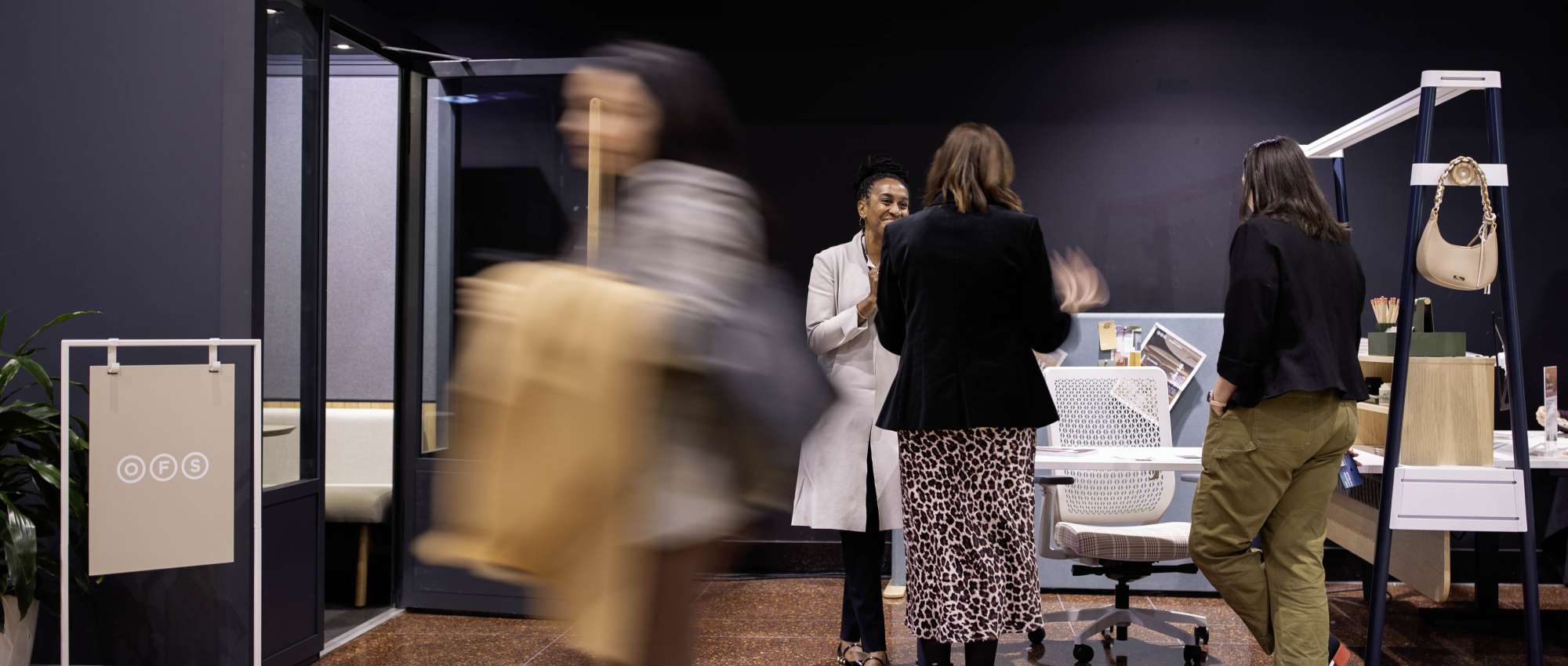
Reflections from WorkX Dallas 2026
From Christina Jameson, Director of Workplace, and Lydia Moya, Brand Manager at OFS
At WorkX Dallas, workplace leaders from across industries gathered to explore how organizations are redefining the role of the office. Through conversations and speaker insights, one message rose above the rest: the workplace is no longer required—it must be earned.
At OFS, we have been researching key shifts in workplace design, culminating in the launch of our CEU and whitepaper around the Power of Choice. Attending events like these are an important part of continued learning and feedback from leaders who experience workplace change daily.
It was energizing to hear directly from workplace leaders inside major organizations like Warner Music Group, PepsiCo, Eli Lilly, TDECU, Microsoft, UT Health San Antonio, and many more. Through relationships with customers, partners, and ongoing dialogue on the Imagine a Place podcast, we constantly seek to listen and learn how we can create solutions that deliver meaningful experiences for people.
Here are a few insights that stood out from the conference:
1. The workplace must be a destination
The workplace has undergone one of its biggest transformations since the Industrial Revolution. The pandemic, evolving technology, the rise of AI, and new generations entering the workforce are all shifting expectations for the workplace.
Return-to-office mandates alone cannot rebuild culture. If organizations want people in the workplace, the experience must compete with the comforts and autonomy of home.
As Mauricio Toledo shared, “We can’t win against home with policy, it must be led by experience.”
He also reframed the workplace as a value platform. For employees, the value is culture, connection, and meaningful experiences. For employers, the value is measurable outcomes, predictability, and—most importantly—people choosing to come in.
For Amy Schaewe at Eli Lilly, they took this to heart in the design of their campus, adopting the tagline, “from highway to hallway,” to ensure that their workplace experience team considered not just the workplace buildings themselves, but the entire employee experience from home to work and back again.
The Microsoft Work Trend Index highlights that 85% of employees say they are motivated to come to the office to connect with their coworkers. When we create thoughtful, engaging, people-centered work environments, people will choose to come, and create vibrant office culture in the process.
2. Flexibility and choice must be built into the system
Teams, roles, technology, and AI integration change faster than most workplaces are designed to adapt. Leaders consistently highlighted the challenge of creating workplaces that support dynamic, evolving organizations.
As Mauricio Toledo explained, “I create a layout for six people and then we hire the seventh and they’re either left out or I have to scrap the workstation setup.”
Organizations are responding by embedding flexibility into workplace strategy. Andres Cueto shared how TDECU moved to an unassigned workplace, giving employees the freedom to choose how and where they work throughout the day.
Flexibility also means recognizing that people work differently. One in five individuals today identify as neurodiverse, reinforcing the need for environments that support a spectrum of auditory, sensory, social, and cognitive needs. Research consistently shows that providing choice improves well-being, engagement, retention, and innovation, supporting these diverse needs.
Plus, with over three million tons of commercial furniture entering landfills each year, it is essential to create environments that can evolve with organizational need to ensure product longevity and more sustainable outcomes.
3. Data is becoming the backbone of workplace strategy
Another clear trend at WorkX was the rapid rise of workplace analytics and sensor technology.
Where there were once only a handful of solutions providing sensor data, the conference floor at WorkX was filled with organizations offering tools to measure occupancy, engagement, and space utilization.
Workplace leaders are increasingly trying to answer bigger questions:
What environments actually support productivity?
What helps organizations retain talent and sustain culture?
But insights depend on good inputs. As Mauricio Toledo cautioned, “AI can help us optimize, but with bad data, AI only helps you make bad decisions faster.”
Measurement is essential. Not for surveillance, but to better understand what creates value in the workplace.
4. Middle managers are the bridge between vision and reality
While executives set direction, culture is activated in the middle of the organization.
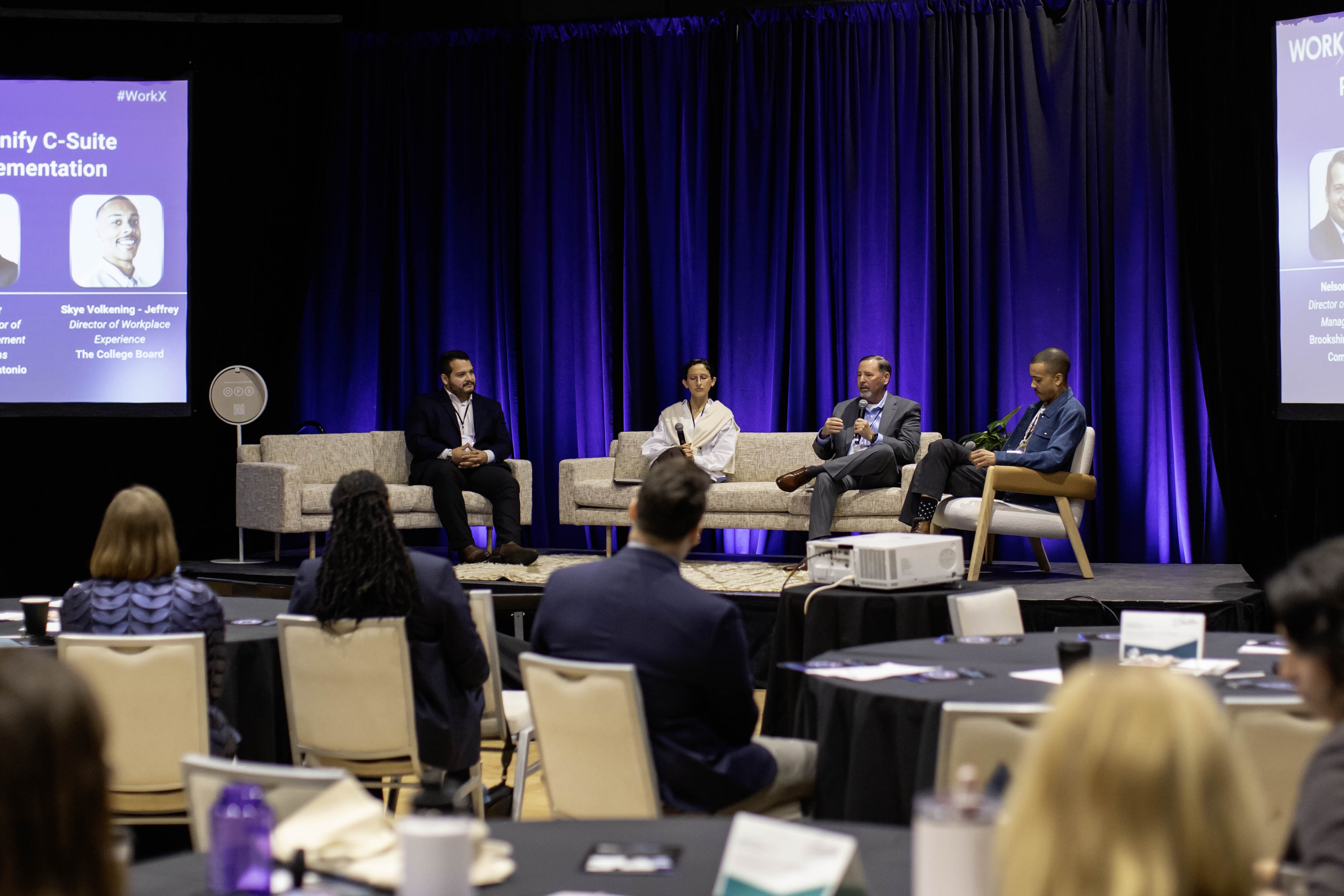
Hannah Hosanna described middle managers as “the glue that activates change management and empowers culture.” They translate strategy into daily team experiences and turn leadership vision into something employees feel in their day to day work.
Research shows the employee experience is shaped less by corporate messaging and more by relationships with immediate leaders. Middle managers sit at the center of this dynamic. They influence how teams collaborate, how work gets done, and whether employees feel supported and connected.
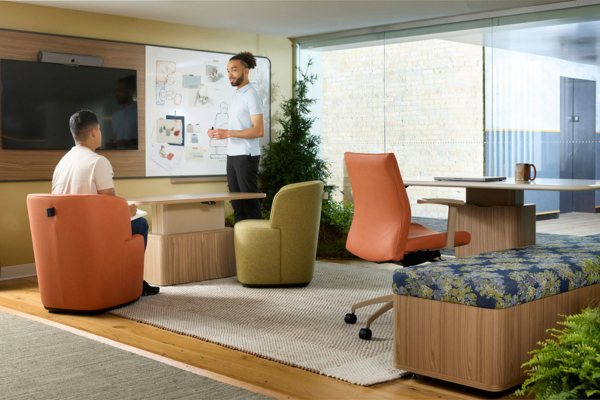
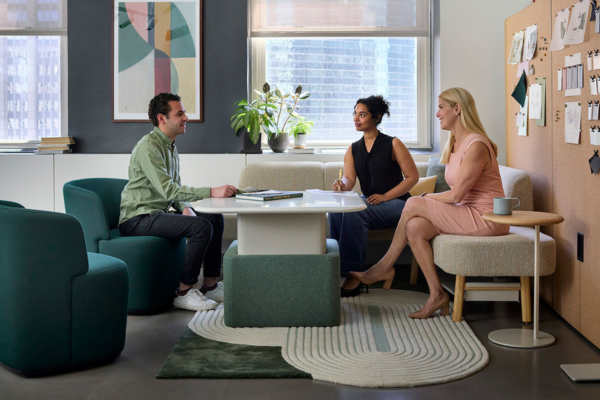
This aligns with the research behind our Humans Over Hierarchy CEU we released last year. One insight surfaced repeatedly. People thrive when leaders are able to coach, mentor, and build relationships, not simply manage tasks. The workplace can help enable this leadership dynamic. Environments that support focused work, mentoring conversations, and team collaboration allow managers to stay engaged with their teams and foster stronger connections.
Without strong middle leadership, even the best workplace strategies struggle to take hold. When organizations equip these leaders with the right tools and environments, they become one of the most powerful drivers of culture, engagement, and performance.
5. Listening is one of the most powerful workplace strategies
Across all three conversations, one thing became clear: flex is maturing.
It’s no longer an add-on or a temporary solution. It’s becoming embedded in how organizations structure their workplace strategy.
For enterprises, flex is a portfolio tool that supports distributed teams without long-term rigidity. For operators, it demands operational precision, not just good design. For designers, it reinforces that adaptability and experience must work together.
Flex isn’t a reaction to change anymore, it’s a framework for navigating it.
If we’re designing workplaces without accounting for that reality, we’re not just missing a trend. We’re missing how work is actively being restructured around people, mobility, and choice.

The bigger takeaway
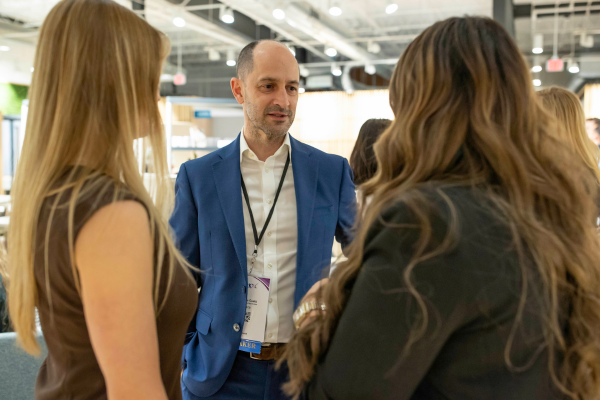
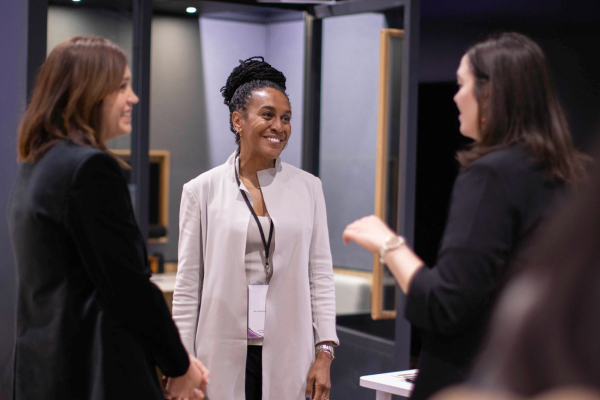
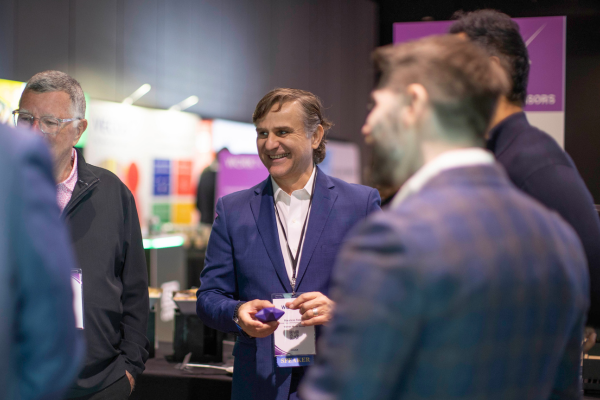
Perhaps our biggest takeaway was simple. The value of WorkX wasn’t just the content. It was the connection. The hallway conversations. The shared meals. The unexpected collisions.
That’s the same experience people are craving from the workplace.
The future workplace isn’t about enforcing presence. It’s about creating environments that make coming together worthwhile.
When organizations design workplaces that support connection, flexibility, autonomy, and belonging, they create something powerful: an experience people simply cannot get anywhere else.
To explore more insights from WorkX, listen to our podcast episode.