



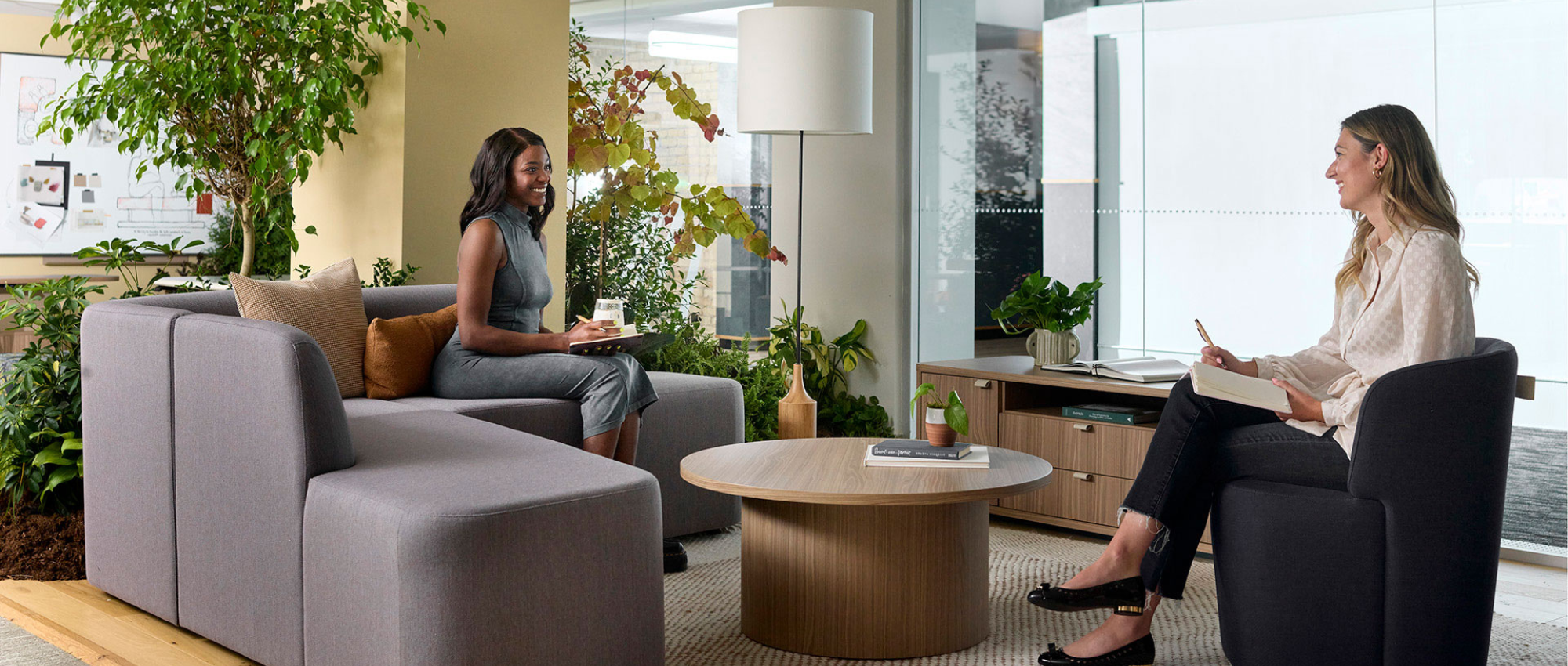
A conversation moderated by Christina Jameson, Director of Workplace at OFS
Meet the panelist
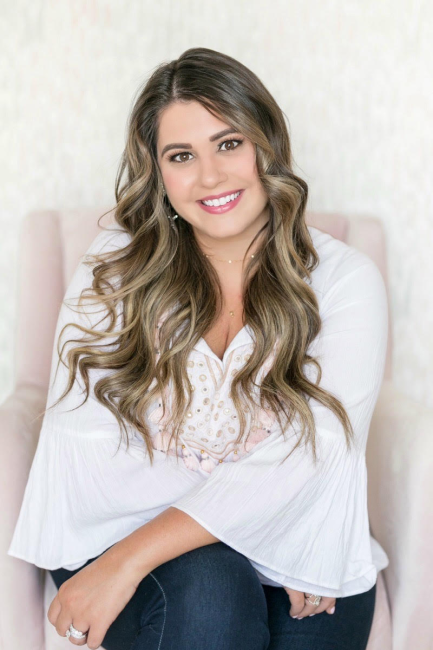
Christina Jameson
Director of Workplace, OFS
WELL AP, Industry IIDA
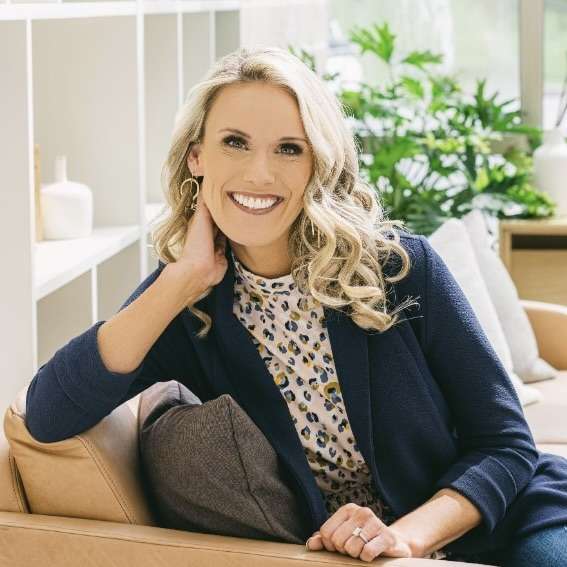
Molly Prior
Senior Vice President of
Sales + Experience, OFS
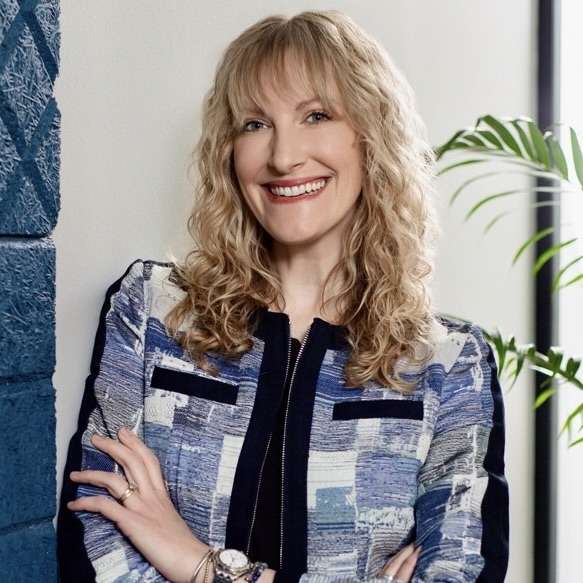
Jessica Collins
Principal + Director of Design, Interiors, HOK
NCIDQ, IIDA, LEED Green Associate, WELL AP
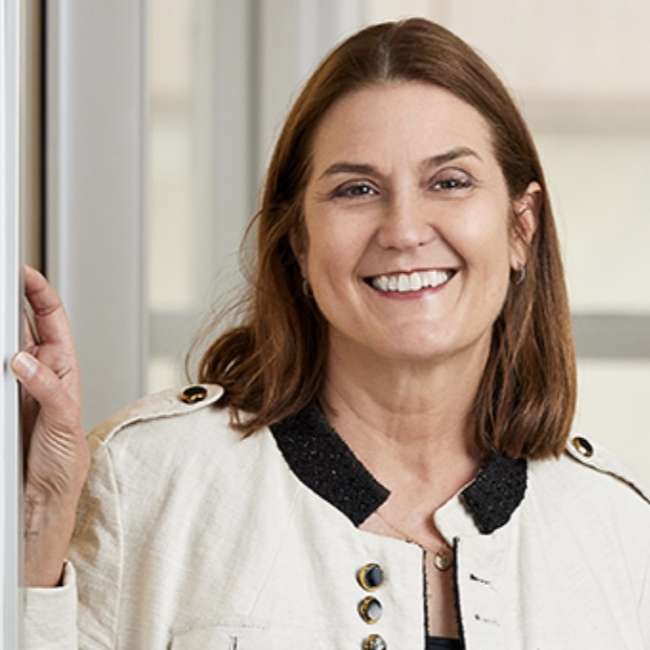
Sarah Devine
Managing Principal, Revel Architecture and Design
IIDA SoCal President
How can workplace design evolve to support a new generation that values growth, collaboration, and meaningful relationships?
This question resonated throughout our recent webinar, Designing for Humans Over Hierarchy, where I had the privilege of moderating a conversation with three brilliant female leaders: Molly Prior, SVP of Experience and Sales at OFS; Jessica Collins, Principal and Director of Interiors at HOK; and Sarah Devine, Managing Principal at Revel Architecture and Design and IIDA SoCal President.
Together, we reflected on how workplace design, especially the private office, has been shaped over time and explored what’s possible when we shift our focus from traditional hierarchies to human-centered needs.
The private office has long symbolized leadership and seniority, but today, leadership is evolving. It’s no longer just about having a space set apart; it’s about creating environments that empower others to grow. This shift invites us to rethink the private office, not to diminish its value, but to better align it with a more people-centered culture.
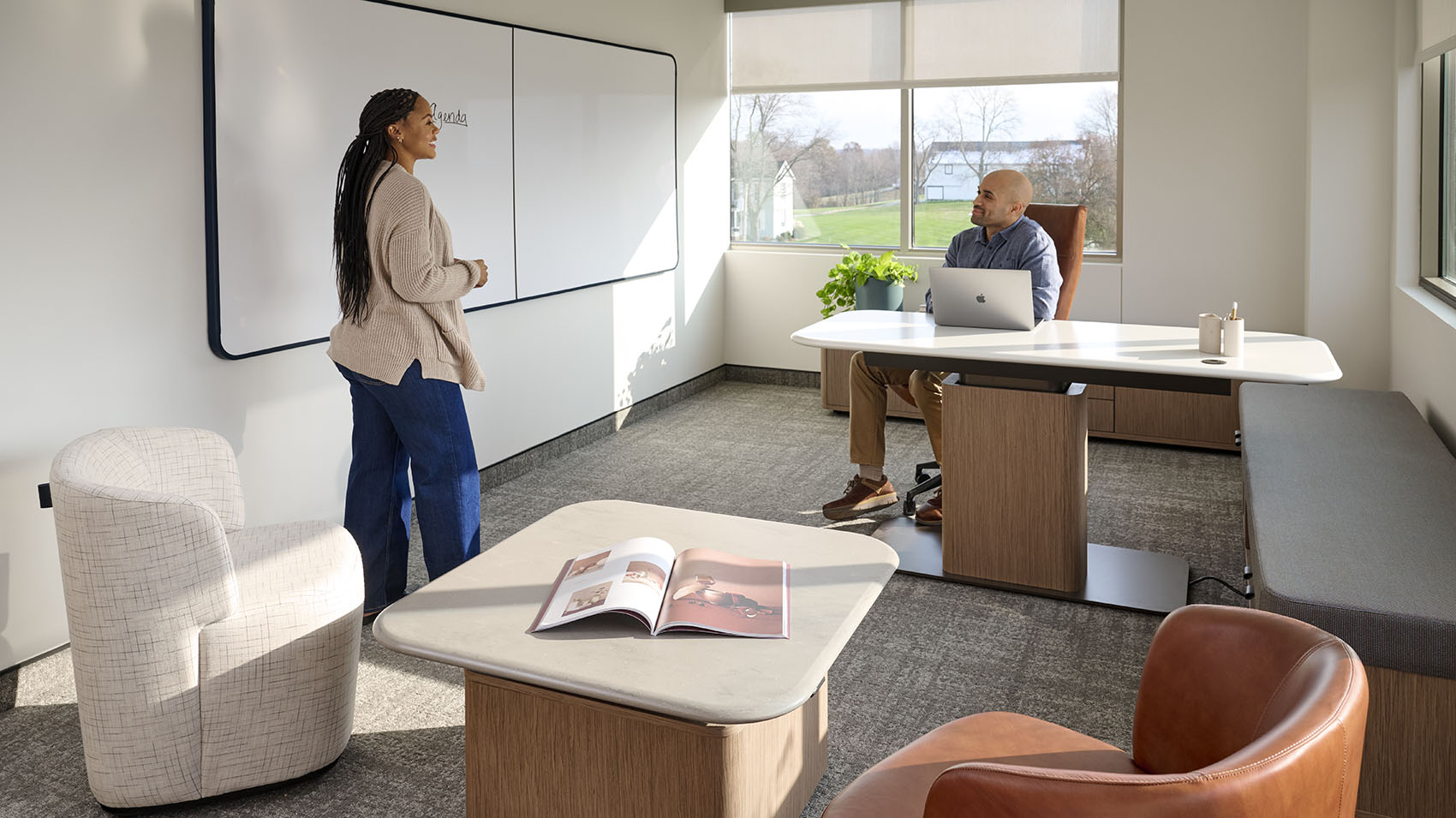
Jessica Collins asked, “If you’re a leader and you’re never visible, never accessible, never approachable—what kind of culture are you actually creating?” This reminds us that leadership is defined by presence.
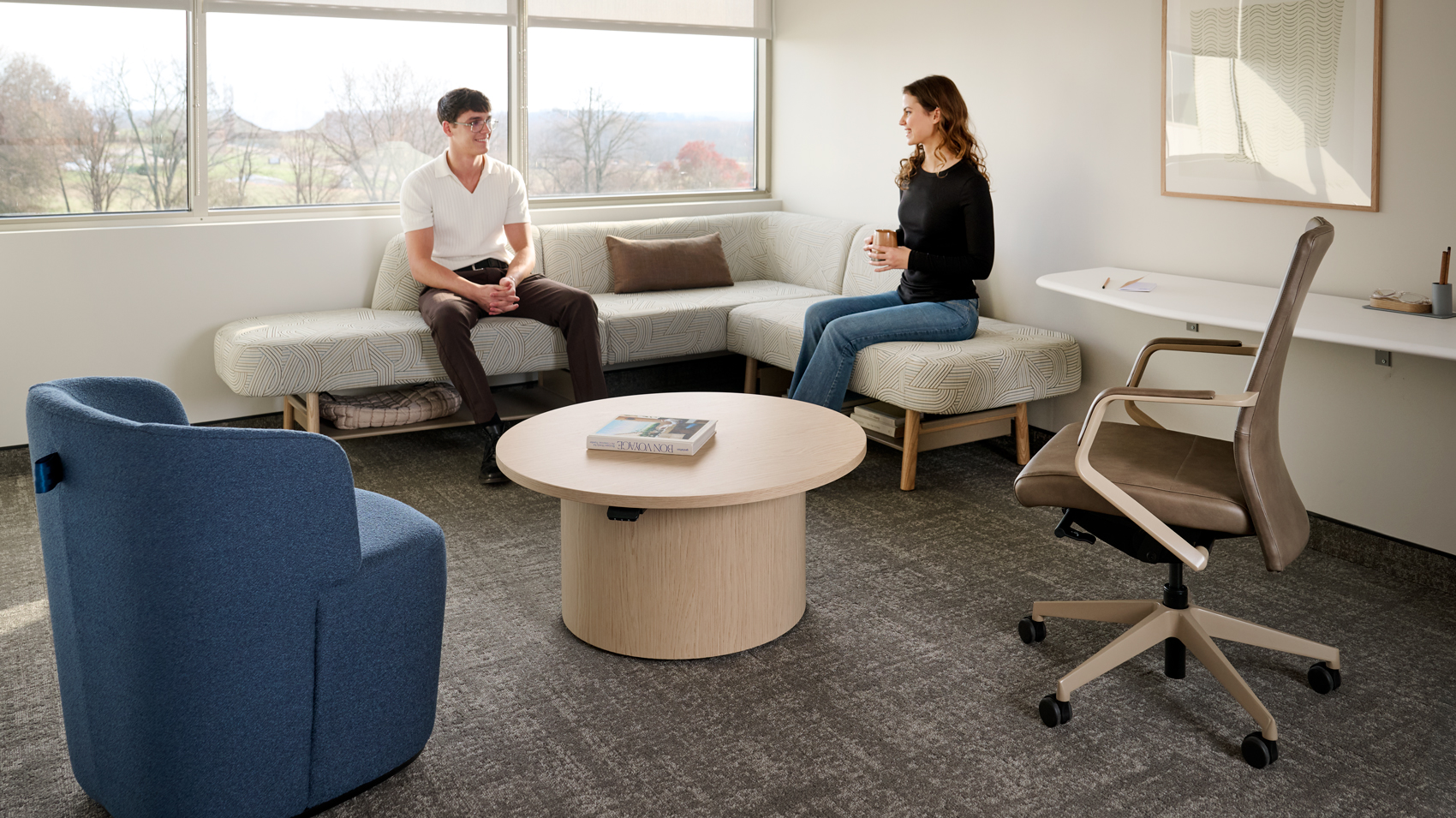
While private offices support focused work they can also isolate, impacting not only individual contributors but leaders as well. From a leadership perspective being tucked away can hinder visibility, empathy and the mentoring moments younger generations crave. Today’s leaders must balance the need for concentrated work with opportunities for connection and guidance throughout the day.
Molly Prior put it simply: “People don’t need to feel impressed—they need to feel seen.” The best spaces foster connection, not just status.
Sarah Devine added, “Design either reinforces or disrupts power structures. There’s no neutral.” If we value people, growth, and inclusion, our environments must reflect that through thoughtful leadership spaces that invite interaction and accessibility.
The Solution: Purposeful Spaces Shaped Around You
We’re challenging ourselves and our partners to see the private office not as a static entitlement, but as a versatile tool for modern leadership.
We believe there is no single private office solution. Every choice, from layout to finish, must be grounded in purpose. To begin, identify the leader you’re designing for and the interactions they need to support: for example a Visionary who alternates between solitary creative work and collaborative strategy sessions; a Mentor who thrives on open‑door coaching and quiet feedback corners; an Operator who balances focused work zones with clear sightlines over team workflows; or a Host whose space shifts seamlessly from desk work to small‑group gatherings.
With that leader profile in mind, ask:
- What key conversations, coaching moments, and collaborations will happen here?
- How should the space adapt between focus, mentorship, and connection?
- Which materials, finishes, and configurations best reflect this leader’s values?
When these questions guide our process, the right solutions emerge naturally. As Sarah Devine reminds us, “Design is culture made visible.” Purposeful tailoring fosters authenticity, empathy, and connection in every private office.
The future of work is human. It’s about truly listening, understanding the needs of modern leaders and their teams, and creating spaces that support meaningful connection, growth, and performance. The private office, and every space around it, must reflect that intention.
Over the next half of the year, we are committed to digging in and uncovering the voices, ideas, and stories from those who are passionate about reshaping the way we work. Together, we’ll continue exploring how design can better support people, purpose, and possibility.