




A life designed around care
Leslie Tagmeyer didn’t follow a traditional path into design, she grew into it.
Raised by an interior designer and an architect, she was introduced to the world of design early, stepping onto job sites as a child and absorbing how spaces come together. But when it came time to choose a career, she stepped away from it entirely.
Instead, she chose motherhood.
For 17 years, Leslie stayed home raising her children. She volunteered in her community, led local organizations, and poured her energy into creating meaningful experiences for others. When she eventually entered the workforce, she did so in a way that mirrored her life, intuitively, wholeheartedly, and with people at the center.
Today, as a Design Project Manager, that same mindset still guides her.
But ask her what matters most, and her answer is immediate:
"Being a mom is my favorite. It really is."

The reality of balance
For working mothers, the transition between roles is constant, and often invisible. “You walk into work, you’re an employee. You walk into your home, you’re a mother.” There’s rarely space in between. That lack of transition is where stress builds, energy drains, and balance becomes harder to maintain. Leslie describes it as a constant juggling act, one where not everything can afford to be dropped. "It’s a balancing act. You want to get your job done, but you also want to make sure you have time for your family, and for yourself." And yet, in most workplaces, there’s little intentional space designed to support that balance.
Why moments of pause matter & how to design for that
In the middle of busy workdays, meetings, and responsibilities, the idea of pausing can feel unrealistic. But for mothers, especially those navigating new motherhood or little sleep, those moments are essential. "You never know what someone is going through. A mom could have been up all night with a baby and then comes into work for an important meeting." Without time to reset, everything compounds. Even a few minutes can make a difference. Even five or ten minutes of privacy, just time to yourself.
So what does this actually look like in practice? According to Leslie, creating a restorative space for mothers isn’t about one big design move, it’s about a series of thoughtful, human-centered choices. Whether you’re designing an entire room or simply looking to create moments of calm within an existing space, here’s where to start:
Design through the senses
Leslie approaches restorative design by thinking about the full human experience. Each sense plays a role in either creating stress, or relieving it.
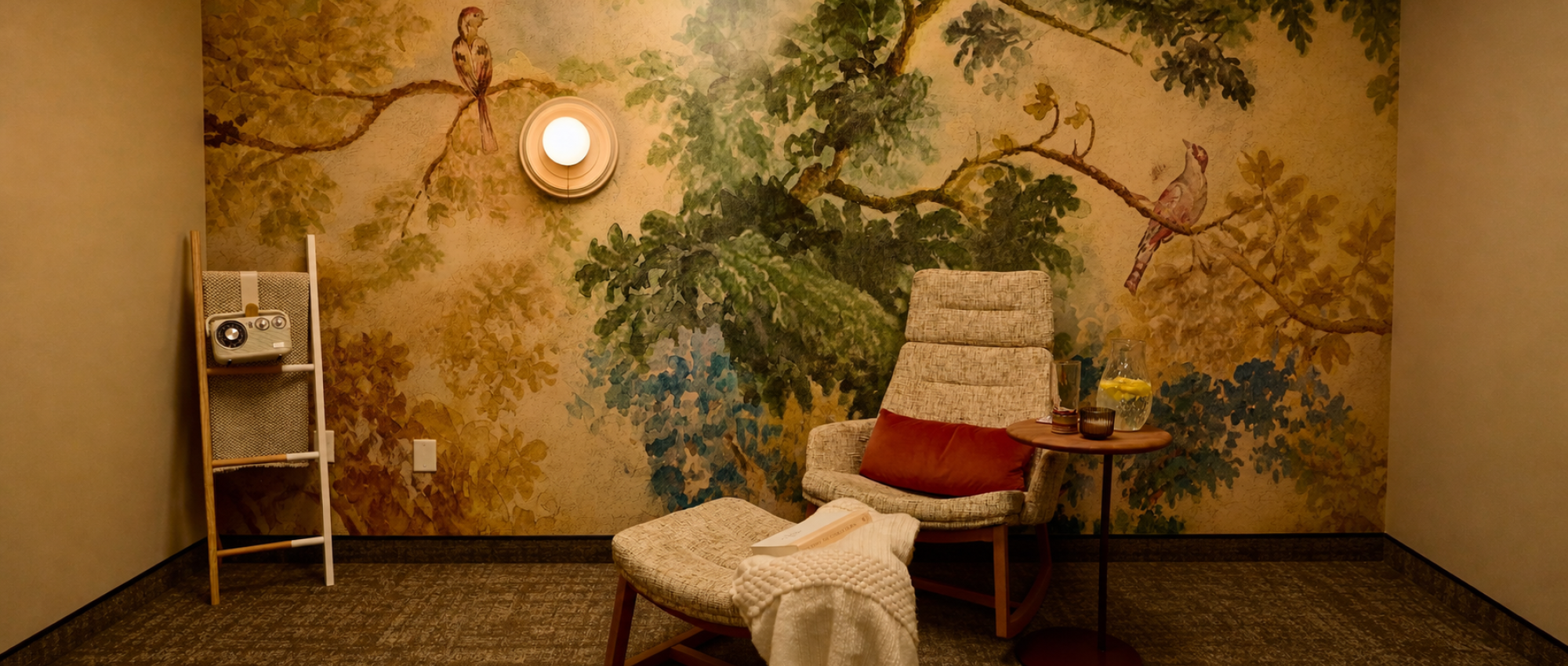
1. Sight: Create visual calm
What we see directly impacts how we feel and function.
Start here:
- Prioritize natural light whenever possible
- Use soft, neutral color palettes
- Incorporate lamps and dimmable lighting instead of harsh overheads
- Layer in soft textures through fabrics and wall coverings
“Color affects everything. A space can either help you function, or make it harder.”
A calming visual environment signals to the body that it’s okay to slow down.
.jpg?VersionId=esWneu12qXc36W3rojvzVTTLypDPuS.U)
2. Sound: Give control back to the user
.jpg?VersionId=V1yx4lEBC5TxZw6WGjxI1p28osGtJkDF)
Sound can quickly become overwhelming, especially in shared environments.
Design for flexibility:
- Allow for quiet whenever possible
- Avoid constant, shared background noise
- Support personal control through headphones or optional sound machines
“Sometimes you just need quiet.”
The key is choice, what relaxes one person may stress another.
3. Smell: Keep it simple and neutral
Scent is deeply personal, and often unpredictable.
Best approach:
- Avoid strong or artificial fragrances
- Maintain a clean, neutral-smelling environment
While scents like lavender or sandalwood can be calming for some, they can be overwhelming, or even harmful, for others.
“Scent is deeply personal, so it’s best to keep it flexible and minimal.”
4. Touch: Make comfort personal
.jpg?VersionId=xOjf3SkjExcg2OFr5dUgSc8nOw0T_MTt)
Physical comfort plays a major role in restoration.
Focus on:
- Soft, supportive seating
- Cozy, inviting materials
- Encouraging personal comfort items like cardigans or wraps
“Comfort should feel personal, something that’s yours.”
The goal is to create an environment that feels safe, familiar, and easy to settle into.
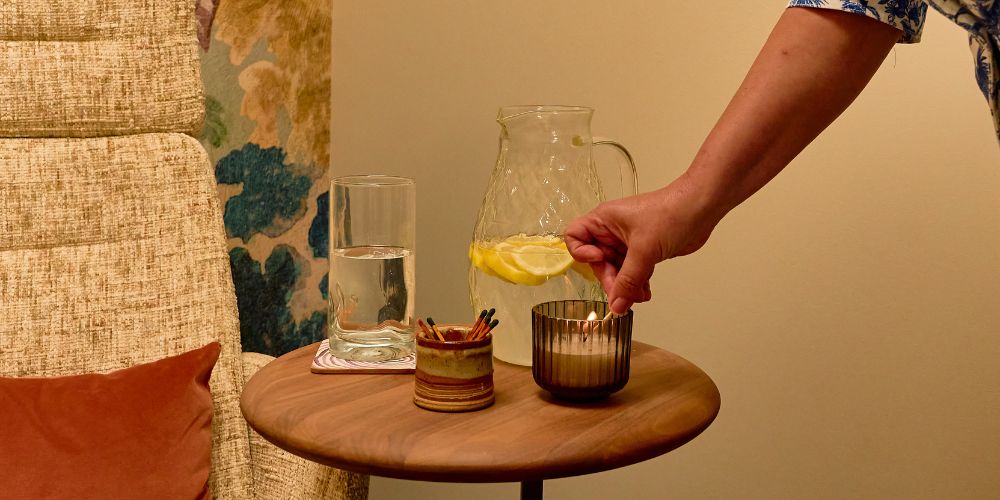
5. Taste: Offer small moments of care
Often overlooked, nourishment can have a powerful emotional impact.
Simple additions:
- Water (infused with fruit or herbs)
- Light, accessible snacks like fruit or granola bars
“It’s just nice to have everything there, even something small.”
These small details communicate care, and remove one more barrier to truly resting.
.jpg?VersionId=nFV.zyNN2guI4SLKIK_TDgY6DXfeydrD)
When you don’t have a dedicated space
Not every workplace has a respite room, and not every role allows for stepping away easily. But that doesn’t mean restoration isn’t possible.
Start small:
- Take short walks, even if it’s just outside
- Sit in your car for a few minutes of quiet
- Use headphones to create a personal environment
- Step away from your desk, even briefly
“Just get away for a few minutes.”
Because ultimately, it’s not just about the space, it’s about creating permission to pause.
Designing for real life
Motherhood isn’t static, and neither are the needs that come with it. From pregnancy to postpartum to raising young children and beyond, those needs constantly evolve. That’s why flexibility matters.
- Create spaces that can serve multiple purposes
- Keep the environment consistent, but adaptable
- Focus on comfort and usability over rigid structure
“Design for people, and what they need in the moment.”
What good design feels like
At the end of the day, success isn’t measured by how a space looks, it’s measured by how someone feels inside it. For Leslie, the goal is simple:
“I want someone to feel comfortable to walk into a space and just be able to pause and breathe.”
Creating spaces that support mothers doesn’t require a full redesign. It starts with small, intentional decisions:
- Softer lighting
- Quieter environments
- A comfortable place to sit
- A moment built into the day
Because when workplaces make room for balance and rest, they’re doing more than supporting mothers. They’re creating environments where people can show up fully, at work and at home.
A final thought
If Leslie could leave one message for working mothers this Mother’s Day, it would be this:
“Take a little time for yourself. You can’t pour from an empty cup.”