



There’s a moment before the paint hits the wall, before the color, before the scale, when everything is still just a feeling. For Liz Flores, that’s where the work begins.
Not with a finished vision, but with something harder to define. A word scribbled in a notebook. A memory that won’t let go. A quiet emotional undercurrent that asks to be translated into form. Before anything becomes visible, it has to be felt.
Liz is an artist and muralist born and raised in Berwyn, right outside of Chicago a city that doesn’t just show up in her work; it lives in it. In the colors, in the energy, in the layered sense of community that shapes how she sees the world. Her artwork spans the country, appearing in major campaigns of iconic Chicago institutions such as the Cubs, White Sox, and Bulls. But beyond the scale and recognition, her work remains deeply personal. It exists somewhere between public and private - shared with the world, but rooted in something entirely her own.
That wasn’t always the plan.
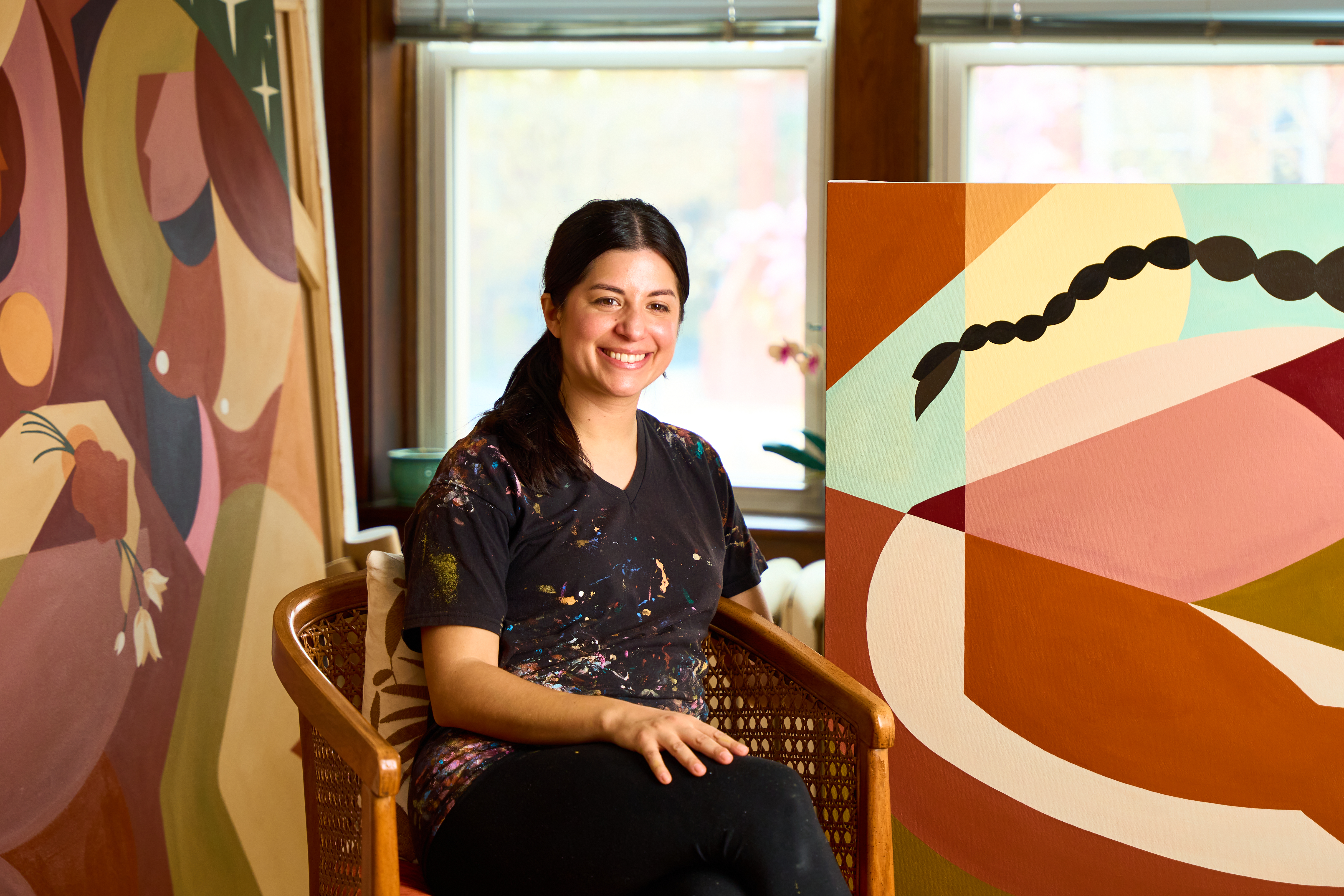
Like many artists, Liz didn’t initially see creativity as something that could sustain a life. So she chose the path that made sense on paper. She studied Small Business Management at Illinois State University and stepped into a version of stability that felt practical, responsible, even necessary. But it didn’t take long to realize that something wasn’t quite right. “I always wanted to be an artist,” she says. “I just didn’t think it was an option.”
What followed wasn’t a clean transition or a perfectly mapped-out pivot. There was no blueprint. No guarantee. Just a decision - to step away from what was certain and toward something that wasn’t. To trust that if she kept showing up, kept working, something would take shape. And it did. But not without tension. Because for Liz, the process isn’t linear. It moves in waves.
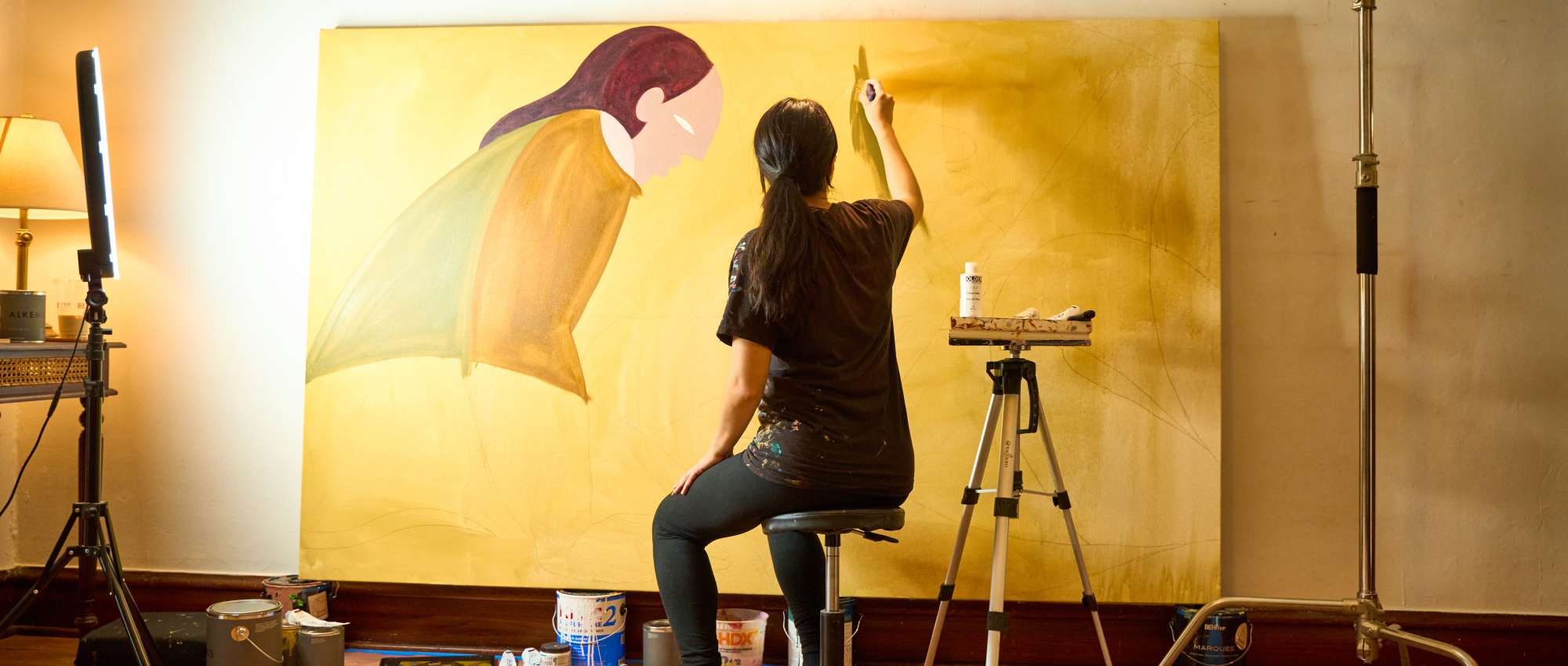
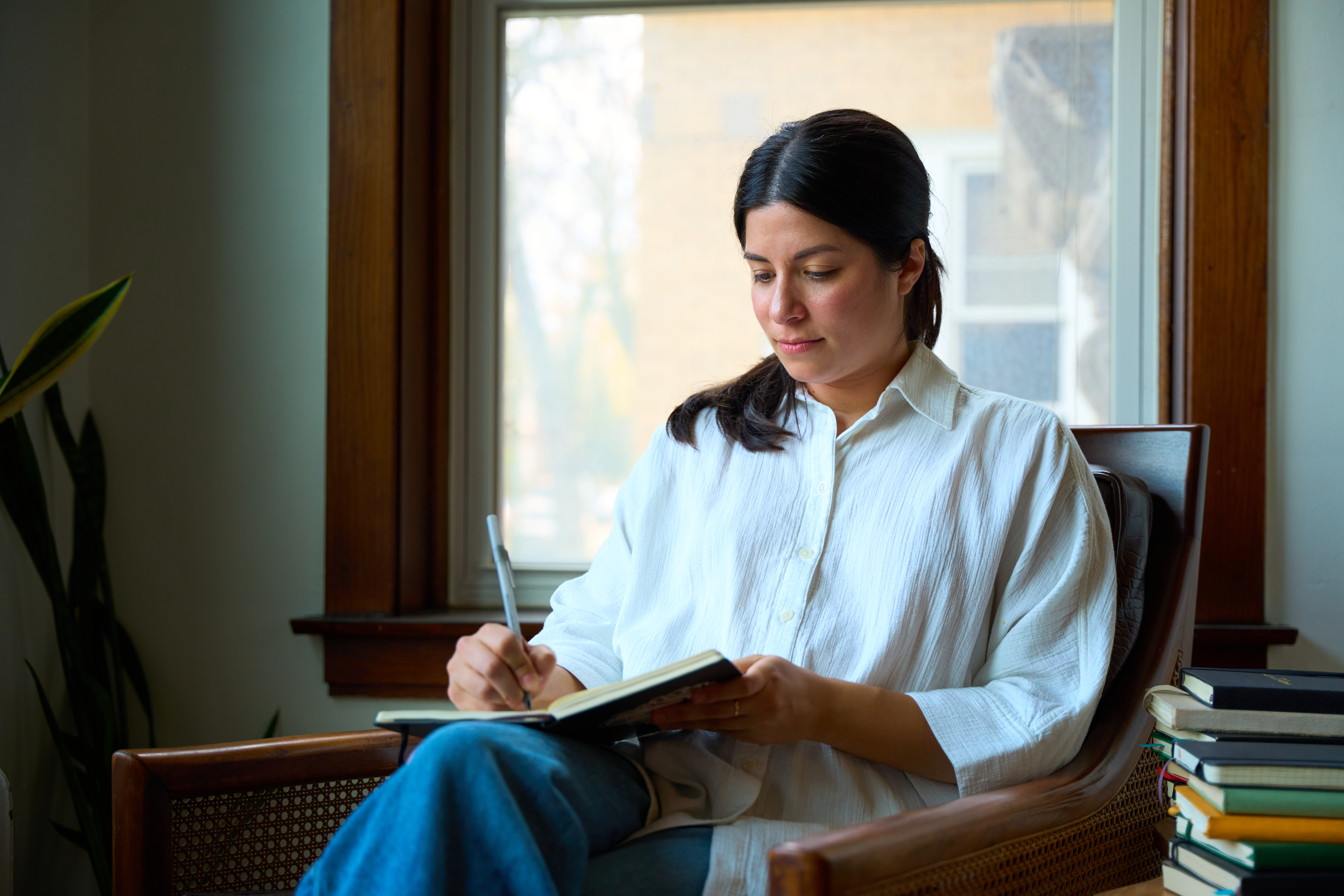
Every piece begins the same way: with a sketch, a few words, a search for clarity. She writes things down, not to finalize an idea, but to understand what she’s trying to say in the first place. Journaling becomes part of the practice, a way to slow down the noise, to process the weight that comes with creating something personal.
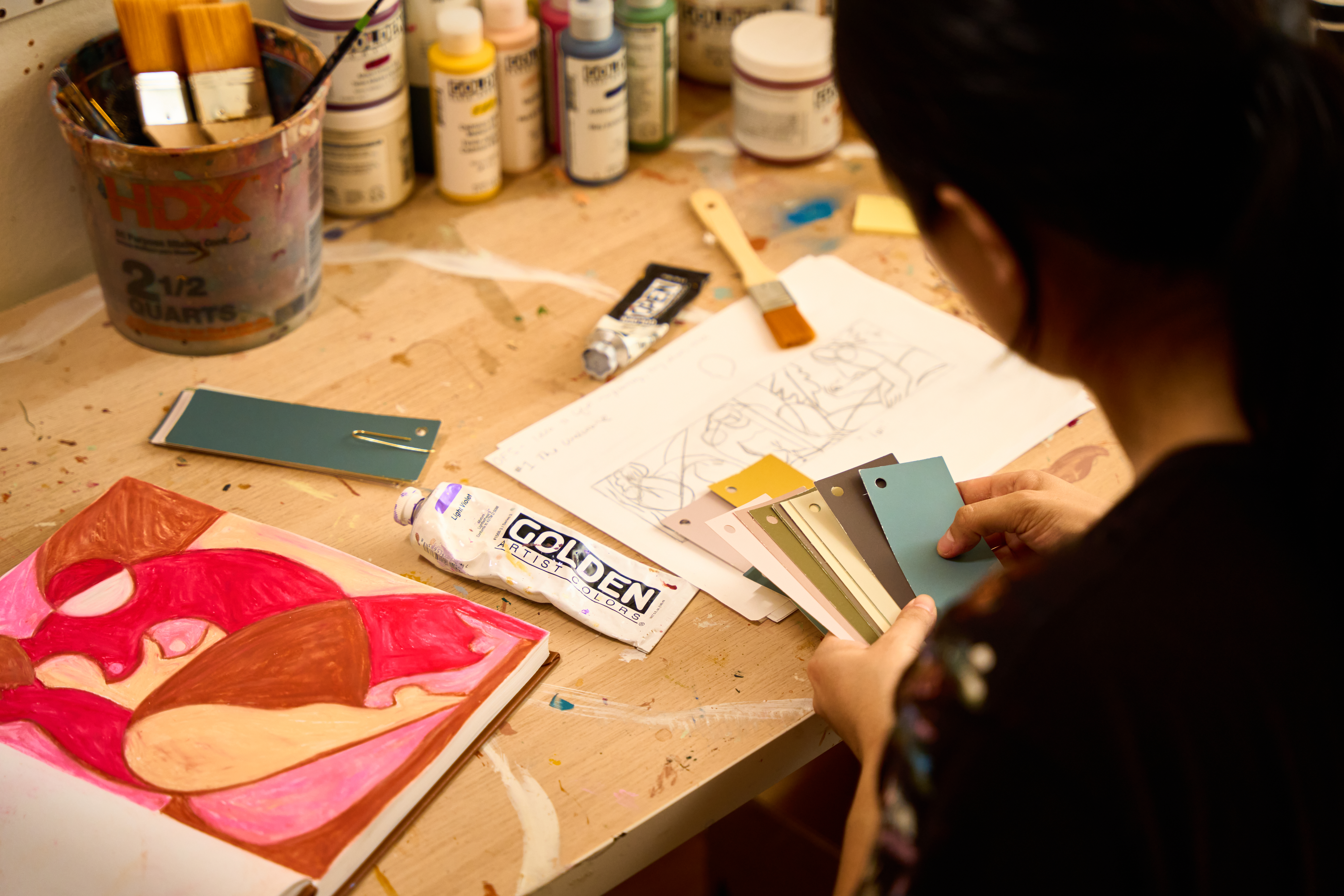
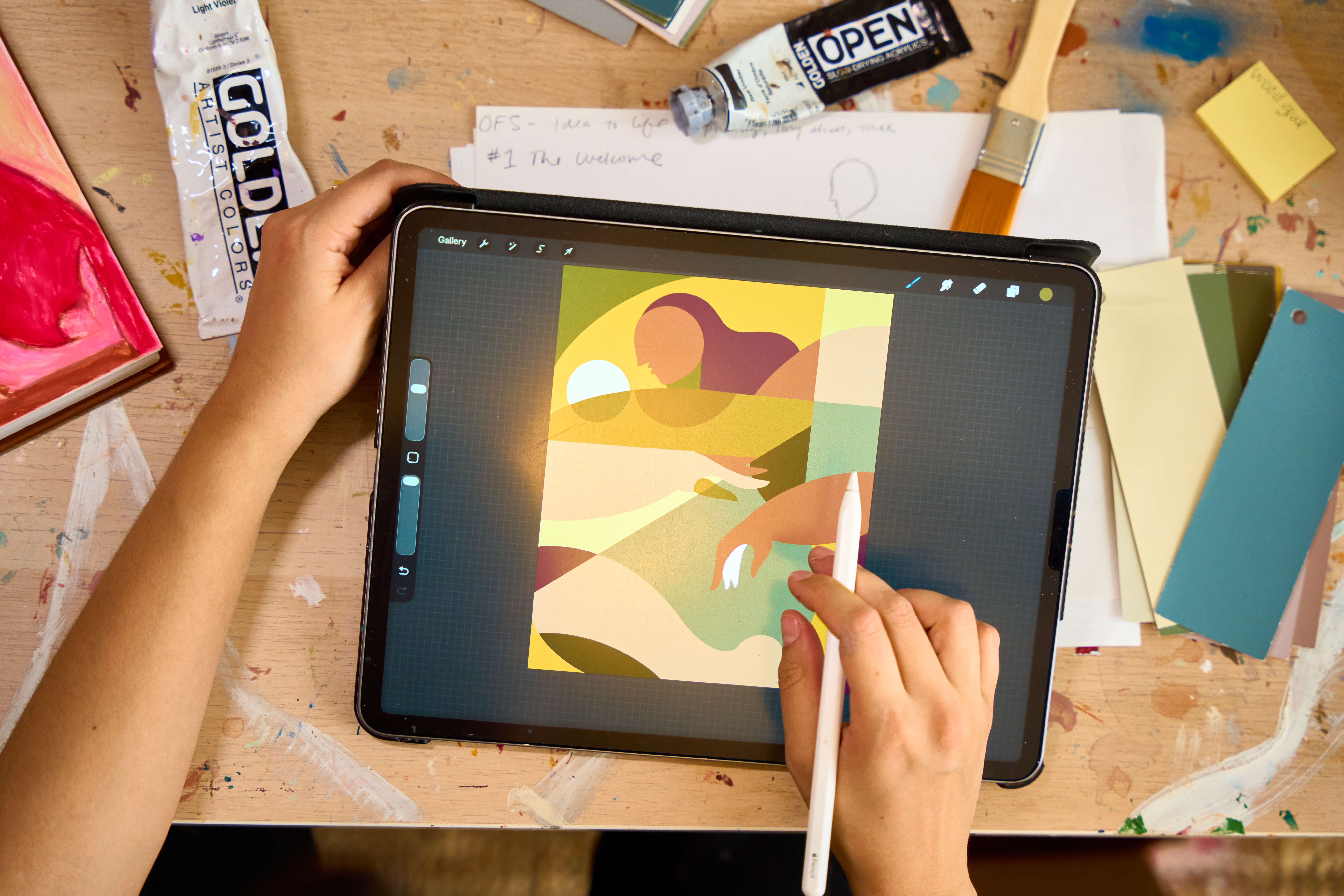
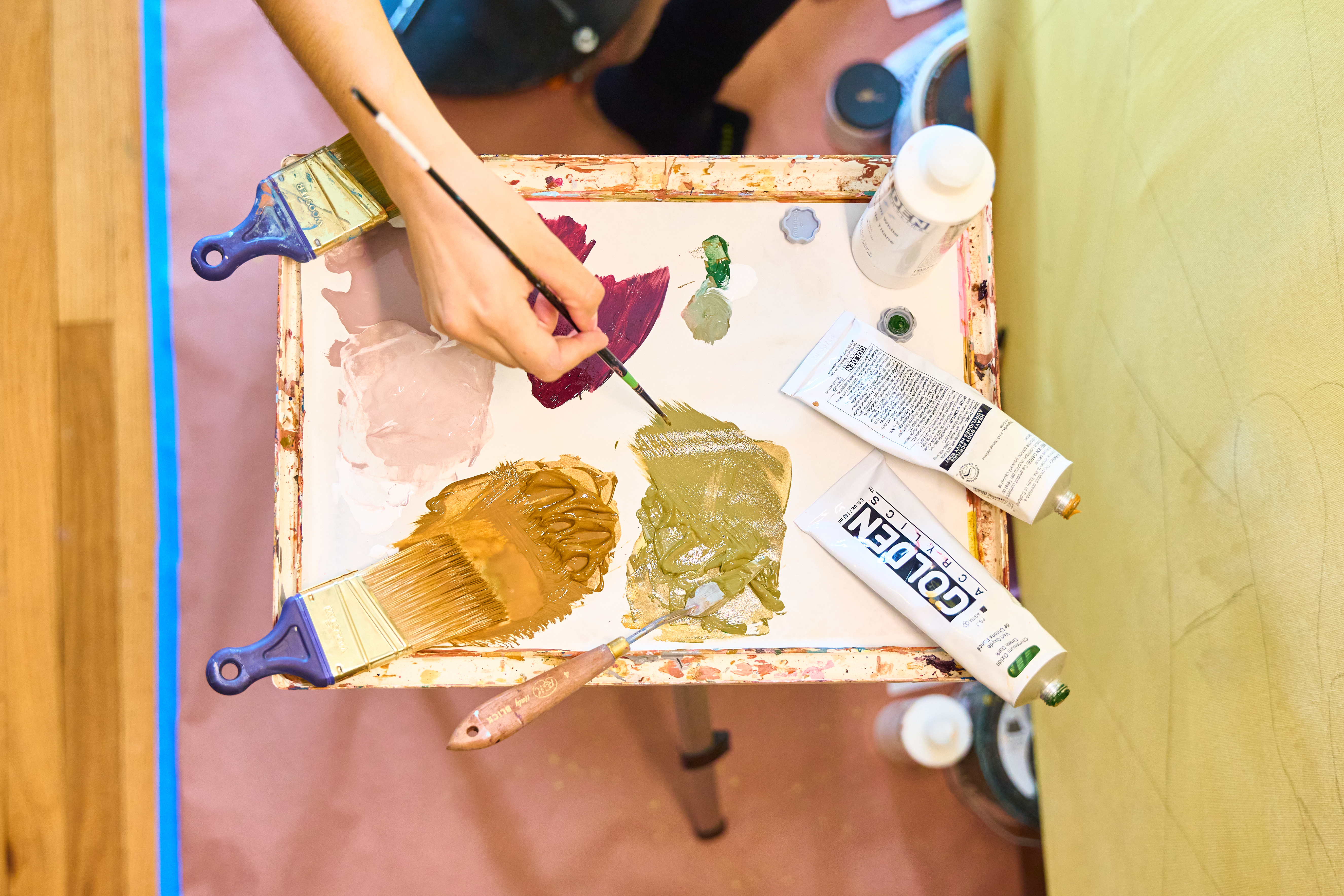
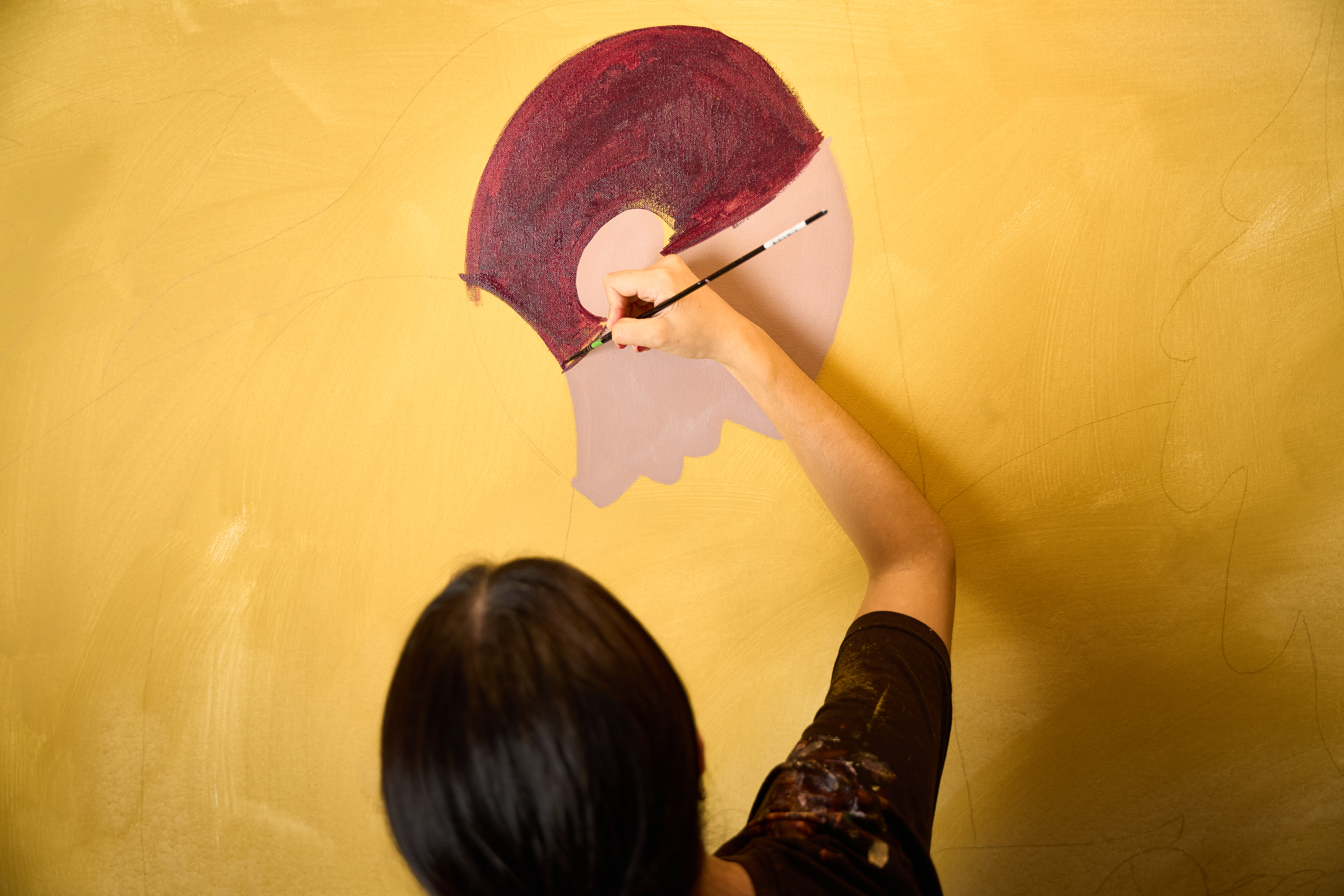
Then comes the shift. The sketch turns into paint. The idea becomes visible. And somewhere in that transition, doubt enters. “Being an artist means learning how to ride the wave between confidence and doubt without letting either define you.” It’s a rhythm she knows well, the excitement of a new idea, the uncertainty of execution, the quiet work of pushing through anyway. The kind of process that doesn’t always feel good, but feels necessary. Because the work isn’t just about how it looks. It’s about how it feels. That’s what Liz is chasing, not perfection, not approval, but resonance.
Inspiration, for her, isn’t something distant or elusive. It’s something she notices. It shows up in the colors she grew up around, the ones she didn’t realize were shaping her until she saw them again years later. It lives in her identity (Mexican and Cuban), and in the stories she’s choosing to tell more intentionally through her work. And it lives in people.
After too much time alone in the studio, she steps back into the world, into coffee shops, onto city streets, into neighborhoods like Avondale, just to be around energy again. There’s something about art that exists within a community, something about murals woven into the rhythm of a place, that reminds her why she started.

Her work often centers on women, not as fixed figures, but as fluid, evolving forms. Faces are undefined. Identities are open. The goal isn’t to tell you exactly what you’re looking at, but to give you space to find yourself within it. Because if there’s one thing Liz understands, it’s that creative work is personal.
Not in a surface-level way, but in a way that makes everything feel closer. Feedback lands differently. Silence lingers longer. A piece that doesn’t sell isn’t just a business outcome; it’s something you carry. “Creative work is so personal, which makes it so difficult.”
And still, she continues. Not because the doubt disappears, but because she’s learned how to move through it. There’s a quiet confidence in that, a belief that not every piece needs to succeed to have value. Some paintings are meant to be seen. Others are meant to teach. And over time, she’s learned to separate those outcomes from her sense of self.
To zoom out. To trust that growth doesn’t always look like recognition. That the work matters, even when it’s not immediately understood. Because in the end, the point isn’t perfection. It’s the feeling.
And maybe that’s what makes her work resonate the way it does. Not just the color or the composition, but the honesty behind it. The willingness to show up in the middle of uncertainty. To keep creating, even when it’s hard. To let the work reflect not just what’s seen, but what’s lived.
Liz’s story isn’t about arriving somewhere. It’s about continuing. Continuing to notice. Continuing to feel. Continuing to create. Because if her work tells us anything, it’s this: The feeling is the point.
To learn more about Liz, visit: https://www.lizfloresart.com/murals